your face isn’t SAGGING
gravity is WINNING
PDO THREADS
Understand the lift. Know the limits.
Before we discuss threads, let’s talk about what concerns you, what a realistic improvement looks like, and whether this treatment fits your goals.
YOUR QUESTIONS, ANSWERED ↓YOUR QUESTIONS, ANSWERED
WHY DO I START WITH YOUR QUESTIONS?
Because threads are often described as a quick facelift. I want you to understand what they can realistically do, what recovery involves, and when another approach makes more sense.
WHAT ARE PDO THREADS?
PDO stands for polydioxanone, an absorbable suture material. Threads are placed beneath the skin. Their purpose depends on the design: some support tissue repositioning, while others are used with the aim of improving skin quality.
WHAT’S THE DIFFERENCE BETWEEN LIFTING AND SMOOTH THREADS?
Lifting threads have features that grip tissue to help reposition it. Smooth threads do not provide the same mechanical lift. We’ll explain which type is being proposed and why.
CAN THREADS REPLACE A FACELIFT?
No. Threads may offer a modest, temporary change in selected patients. They do not remove excess skin or achieve the same result as surgery.
AM I A GOOD CANDIDATE?
We assess skin laxity, tissue thickness, facial structure, medical history, and expectations. Significant excess skin or a goal of dramatic lifting may call for a different approach.
WHAT AREAS CAN WE DISCUSS?
Your consultation can include the brows, cheeks, jowls, jawline, neck, and other concerns. Suitability and intended uses depend on the specific thread device and area; not every concern is appropriate for threads.
DOES IT HURT?
Threads can be uncomfortable. We discuss local numbing and available comfort options before treatment. Tell us about allergies, previous reactions, and any concerns about pain or anxiety.
WHEN WILL I SEE RESULTS?
Lifting threads may produce an early visible change, but swelling and tissue settling affect the initial appearance. Expect to assess the result after healing rather than judge it on the day.
HOW LONG DO RESULTS LAST?
Results are temporary and vary by thread type, area, skin quality, and individual response. Thread absorption and the duration of visible improvement are not the same thing. We’ll discuss realistic expectations for your plan.
WHAT IS RECOVERY LIKE?
Swelling, bruising, tenderness, and tightness can occur. Allow time before important events. You’ll receive instructions about sleeping position, exercise, facial pressure, dental appointments, and follow-up for your specific treatment.
WHAT ARE THE RISKS?
Risks include infection, persistent pain, visible or palpable threads, threads protruding through the skin, dimpling, asymmetry, and an unsatisfactory result. Contact us promptly about worsening symptoms, fever, drainage, or an exposed thread. Seek emergency care for breathing difficulty or signs of a severe allergic reaction.
CAN THREADS BE REMOVED IF I DON’T LIKE THEM?
A problem may need assessment, treatment, or removal by an appropriately experienced clinician. Removal is not always straightforward and cannot guarantee a return to your previous appearance. Don’t try to pull or adjust a thread yourself.
CAN THREADS BE COMBINED WITH OTHER TREATMENTS?
Sometimes. We assess whether filler, neuromodulators, or another treatment fits your goals and plan the sequence and spacing. Combining treatments is not automatically better.
HOW MUCH DOES TREATMENT COST?
We price by treatment area rather than by individual thread. After your assessment, we’ll explain the proposed treatment and total cost before you decide.
WHO PERFORMS MY TREATMENT?
Your treatment is personally performed by Nurse Jordan, MSN, BS, RN. We’ll review your concerns, options, and proposed plan together.
WHAT IF I’M STILL UNSURE?
Start with a complimentary 15-minute virtual consultation. An in-person consultation is $250, applied toward treatment performed the same day. We’ll talk through whether threads are a sensible option for you.

MEET NURSE JORDAN
Before I picked up a syringe, I spent 25 years keeping people alive in the OR.
I'm Jordan — surgical RN, cardiothoracic nurse, and aesthetic injector on Wilshire Blvd.
When you come in, you get me.
Not a rotation of providers.
Just me.
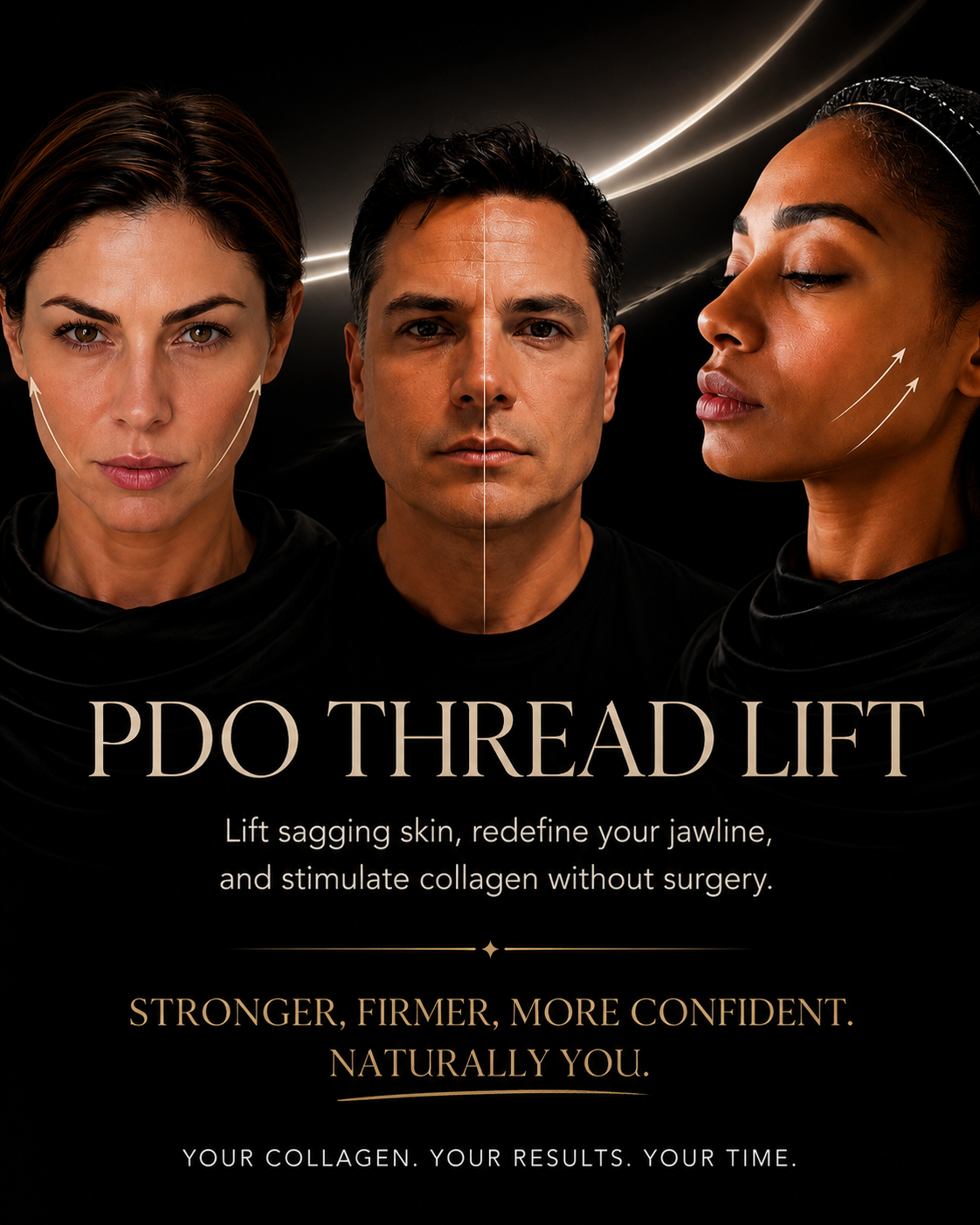
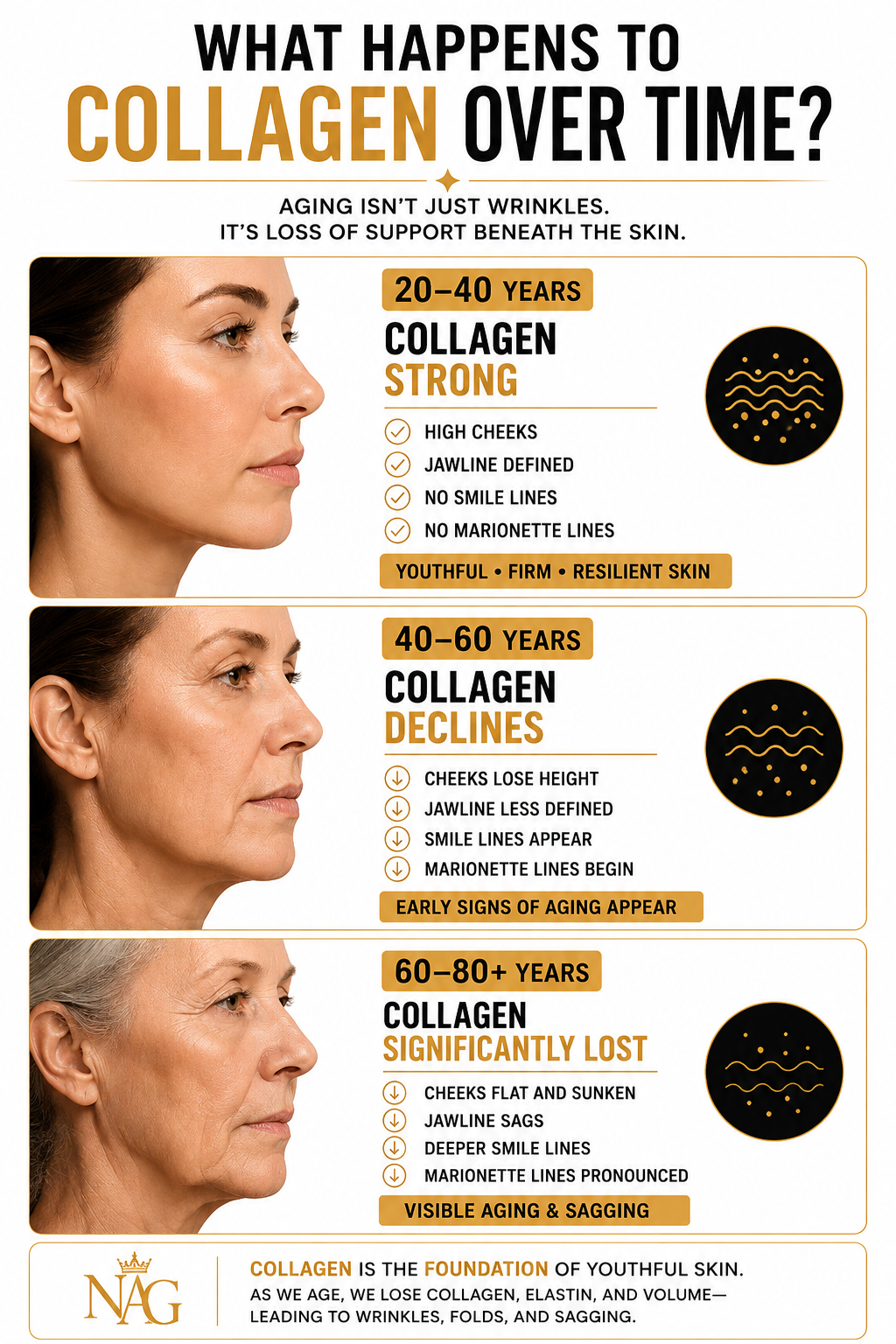
UNDERSTANDING FACIAL AGING


DID YOU KNOW?
- PDO threads are absorbable. The material gradually breaks down over time.
- Thread type matters. Lifting threads and smooth threads have different purposes.
- Results are temporary. The visible effect varies with your anatomy, treatment, and individual response.
- Recovery is part of the plan. Bruising, swelling, tenderness, and activity restrictions may be involved.
Your assessment matters more than an age bracket. These illustrations explain general concepts; they do not determine which treatment you need.

WHAT IF…
- You understood what was changing before choosing a procedure?
- You knew whether the concern was volume, skin quality, tissue position, or a combination?
- Your treatment plan focused on a realistic improvement that fits your face?
- You were told honestly when threads were not the right choice?
Threads are one option—not the answer to every concern. They do not replace a facelift or stop aging. We’ll discuss their limits, risks, and alternatives before you decide.
HOW PDO THREADS HELP PRODUCE COLLAGEN
The thread starts a response. Your body does the building. Follow the four illustrated steps below. Tap any picture to enlarge.
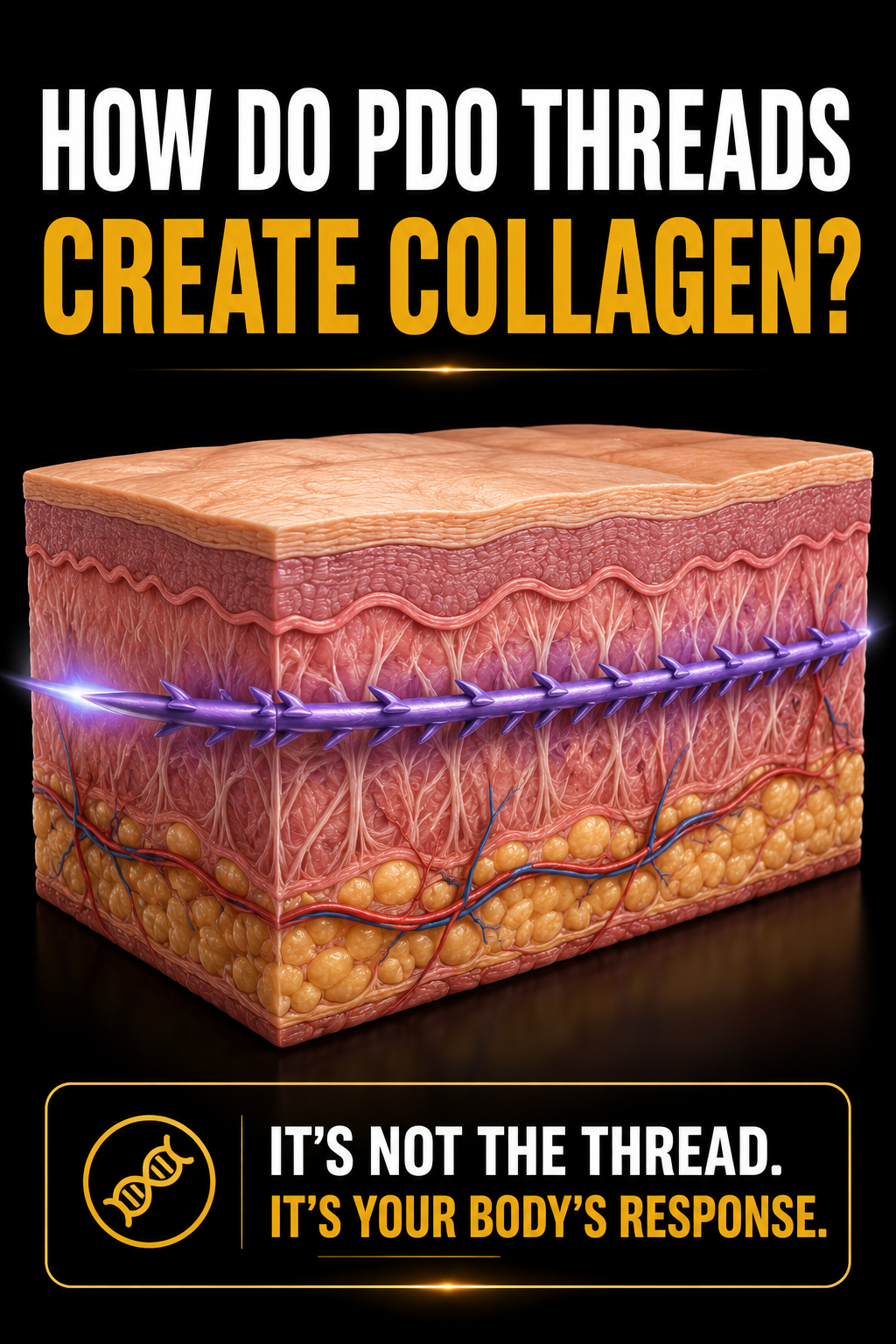
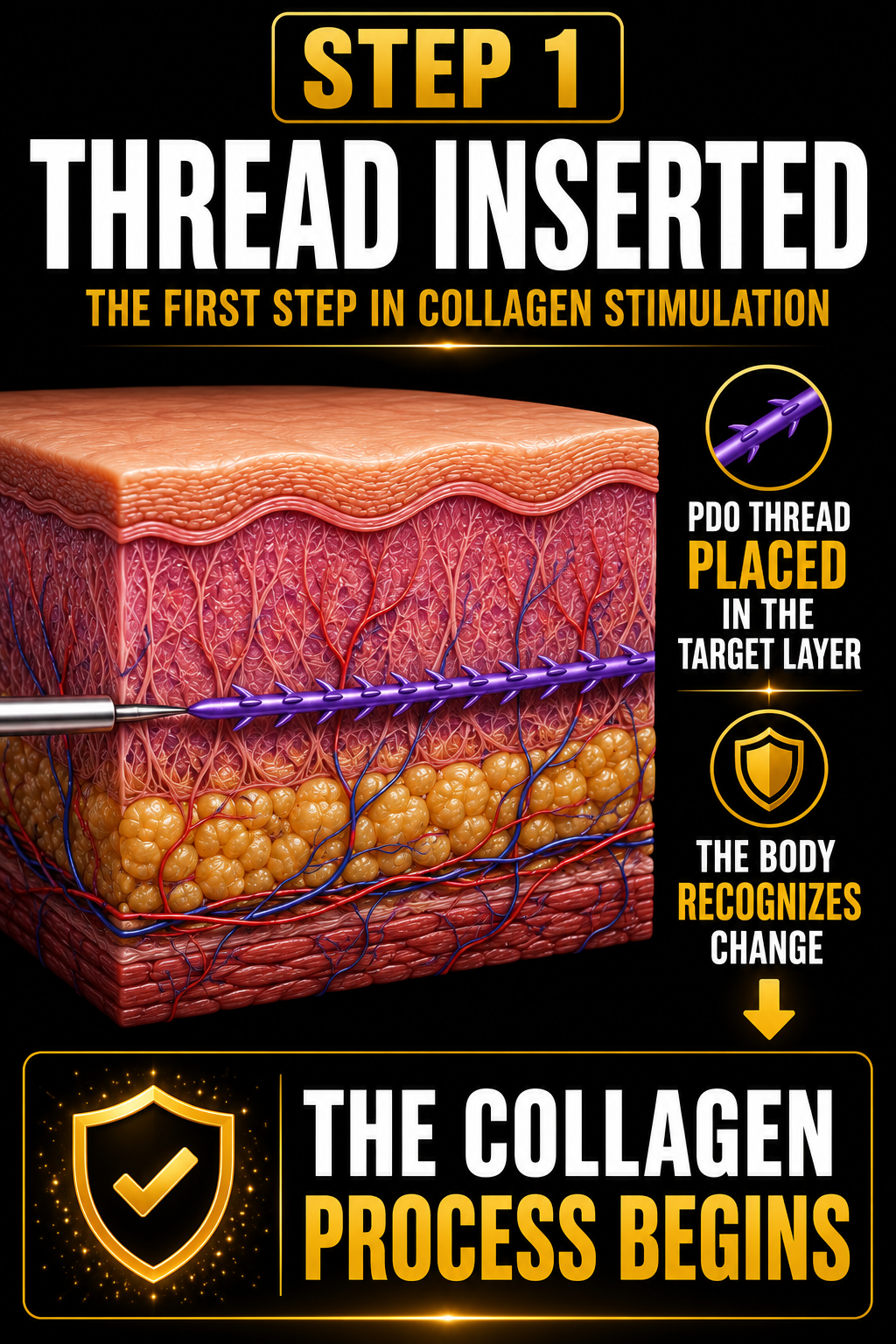
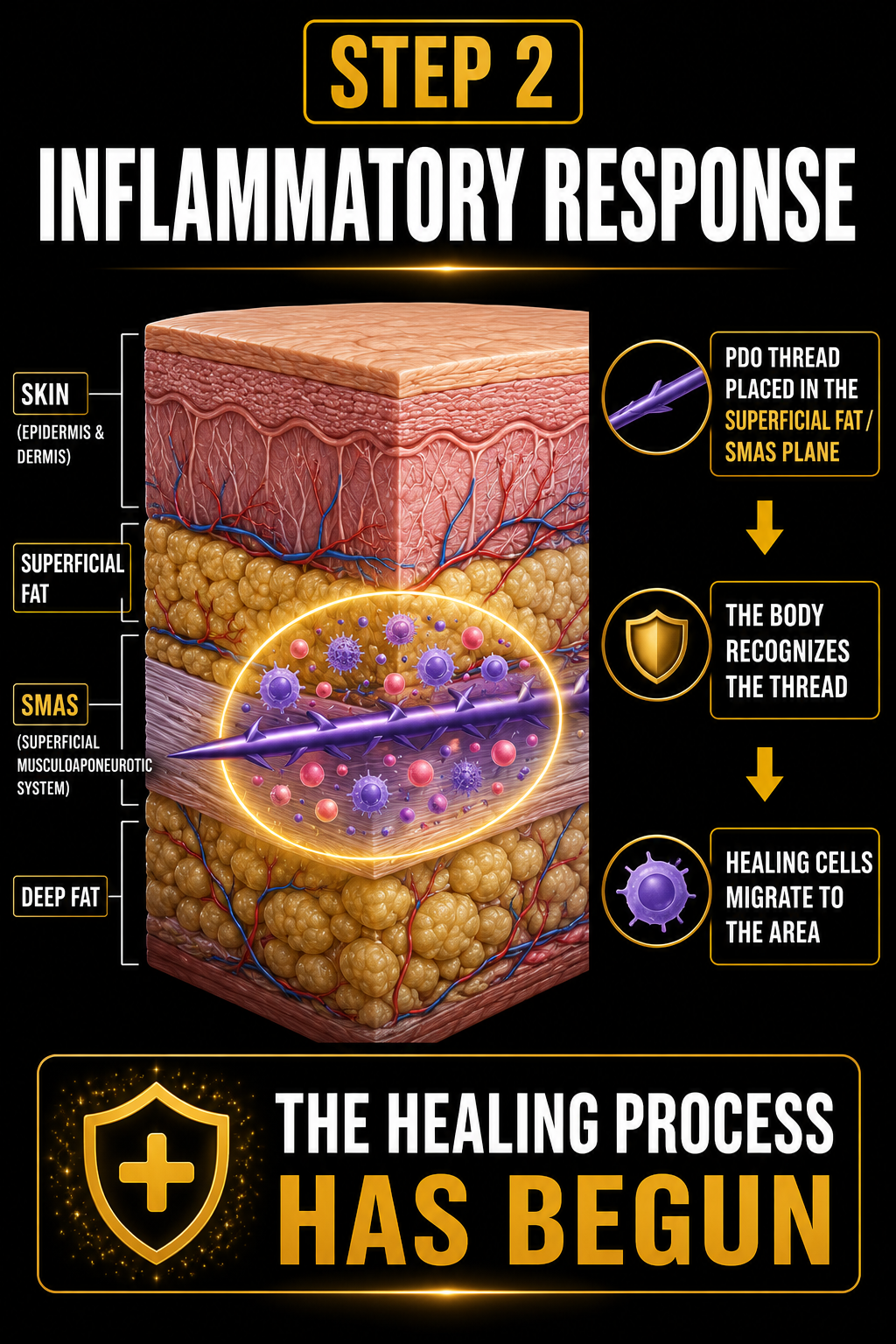
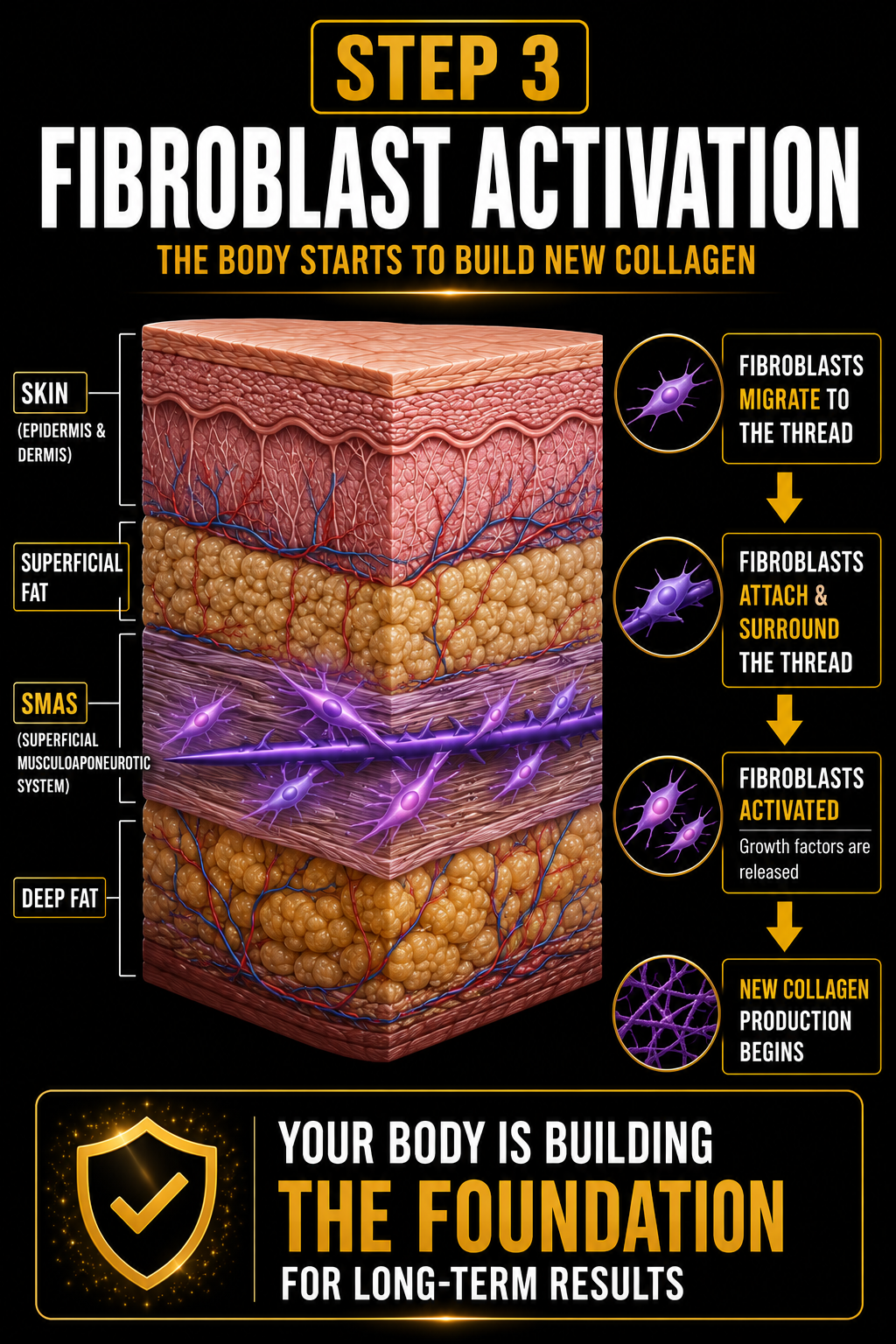
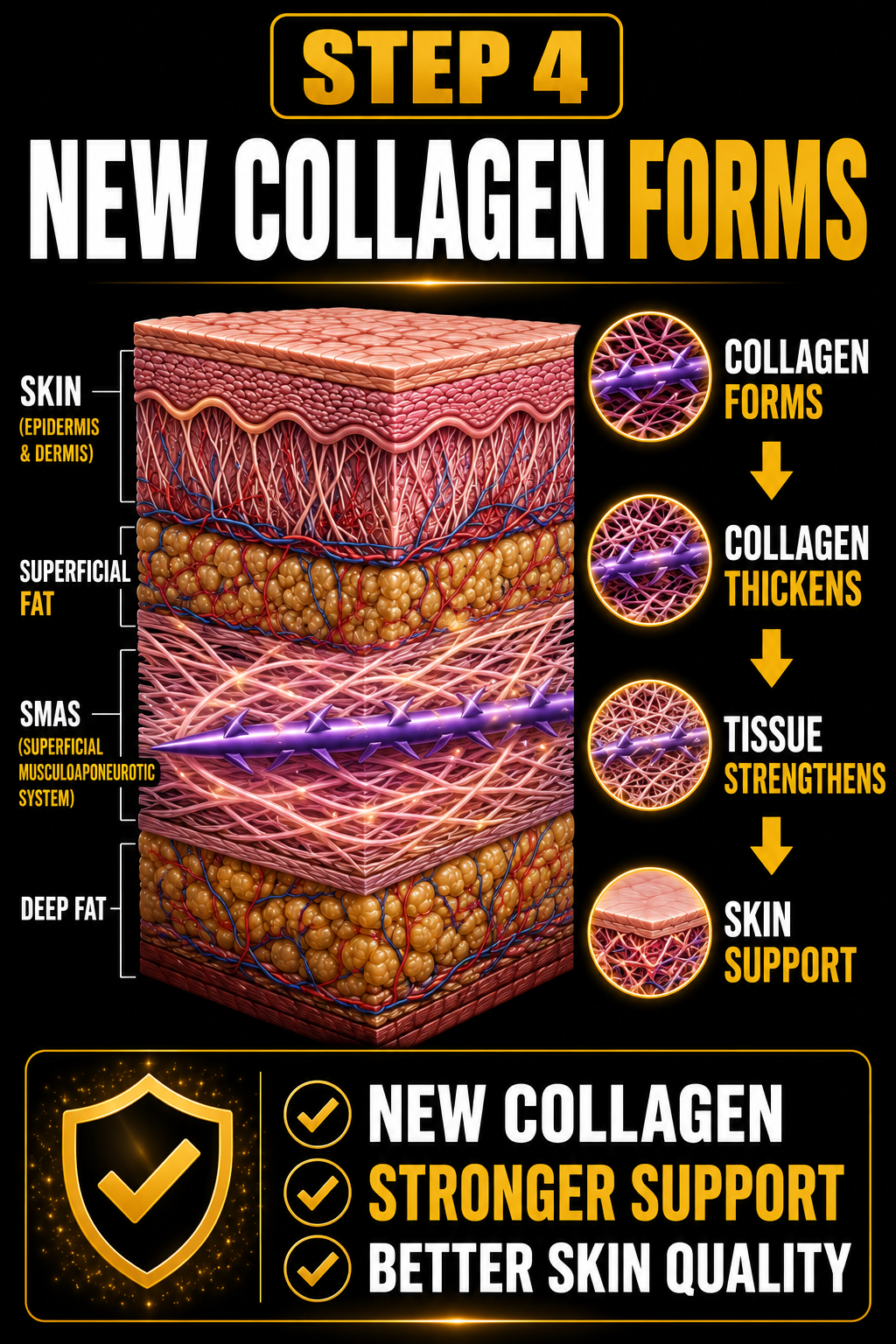
Your body makes the collagen—the thread does not turn into collagen. These diagrams illustrate a general tissue response, not a placement guide. Much of the mechanism research comes from animal studies. The response varies and does not guarantee visible tightening or a lasting lift.
PDO THREADS VS. FACELIFT
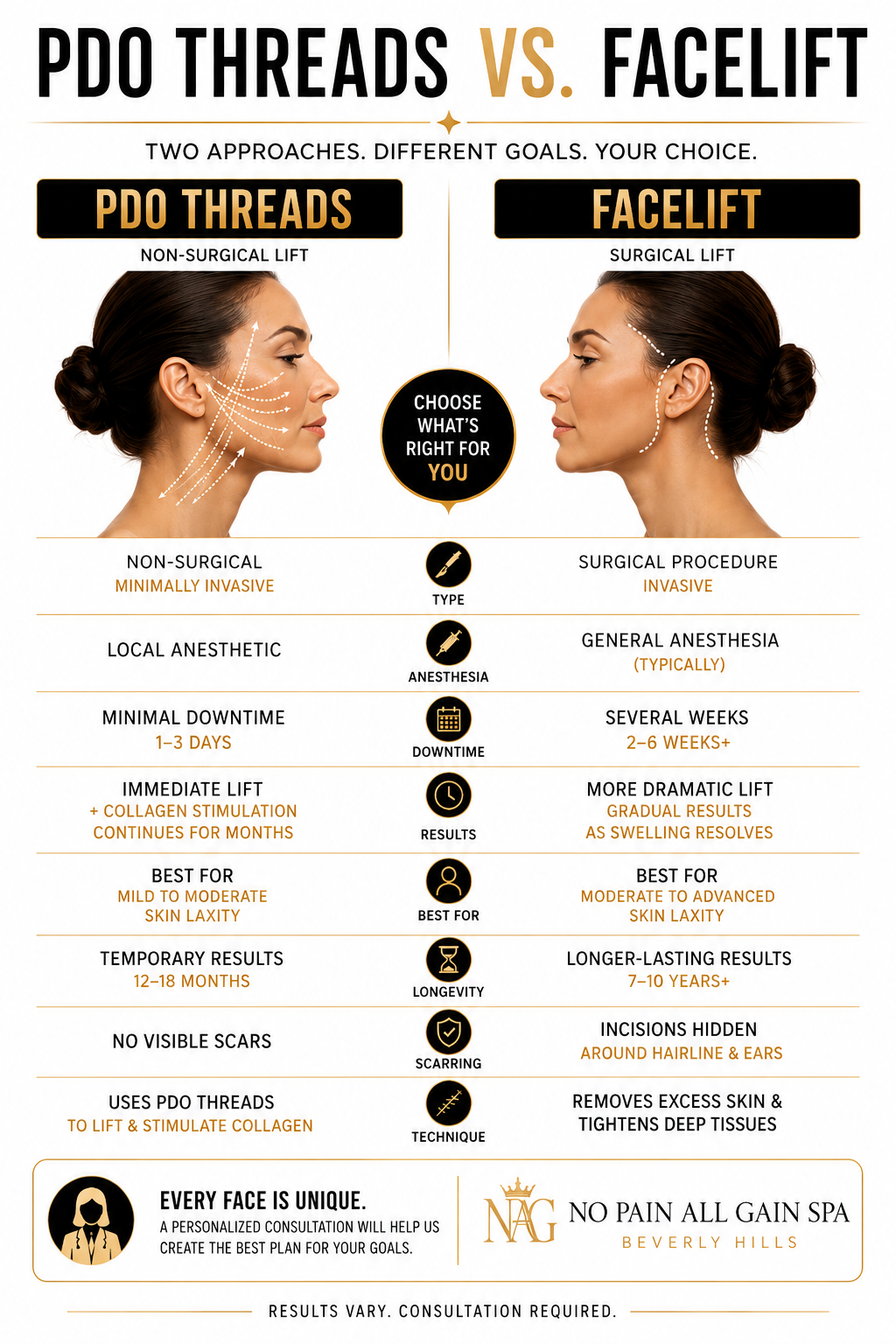
Tap the picture to view it larger.
Different procedures. Different goals.
Threads may offer a modest, temporary improvement in selected patients. Surgery can address excess skin and deeper tissue changes. Your anatomy and goals matter more than choosing the least invasive option.
GOOD TO KNOW Recovery and longevity vary. The figures shown are general estimates, not a promise of your outcome.
WHAT MAKES PDO THREADS LIFT?
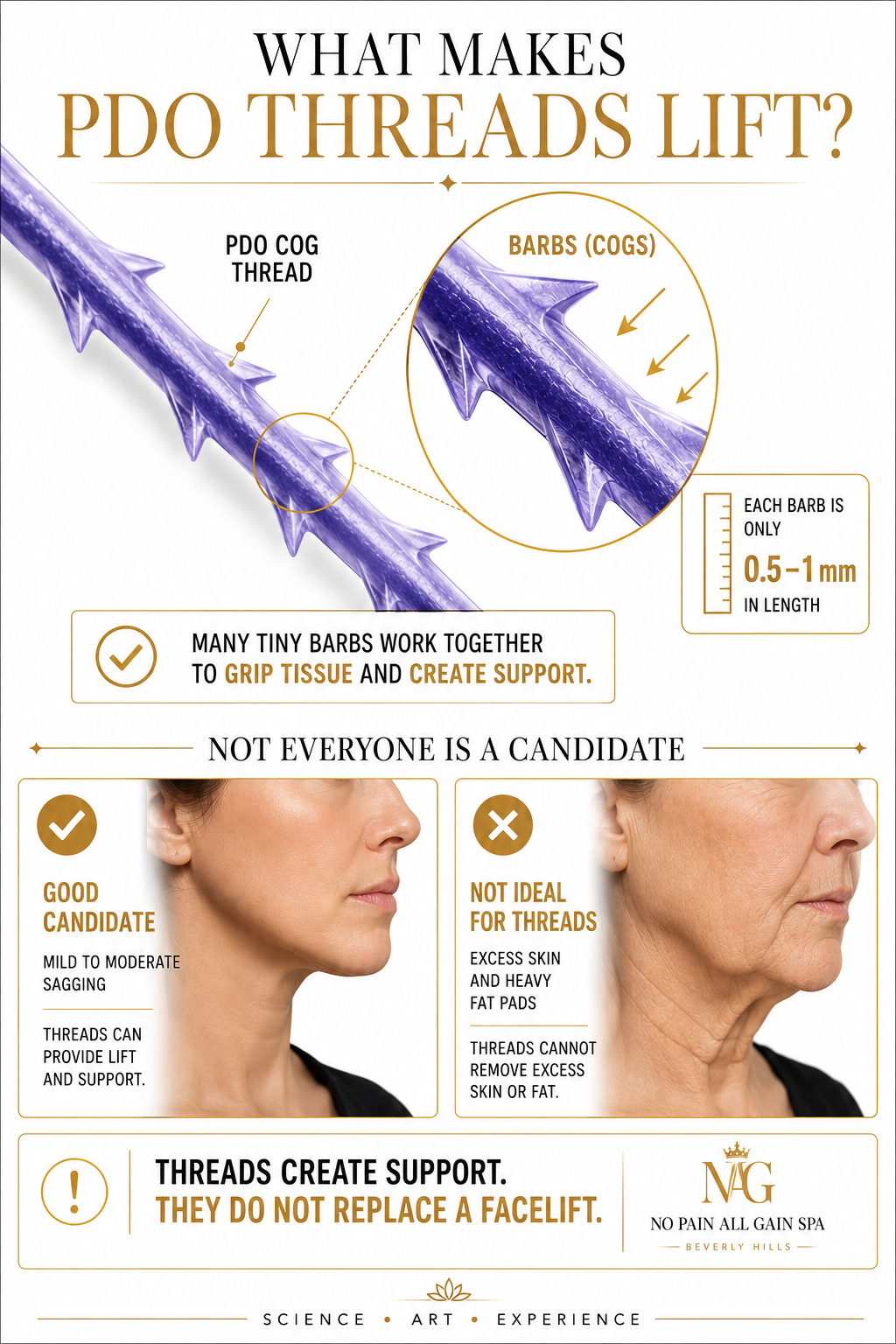
Tap the picture to view it larger.
Small features. An important job.
Lifting threads have tiny barbs, often called cogs, that engage tissue. Their design and placement help support repositioning. Smooth threads do not provide the same mechanical lifting effect.
GOOD TO KNOW The thread shown is an illustration. Cog size and design vary by device, and threads cannot remove excess skin or fat.
BIDIRECTIONAL COG THREADS
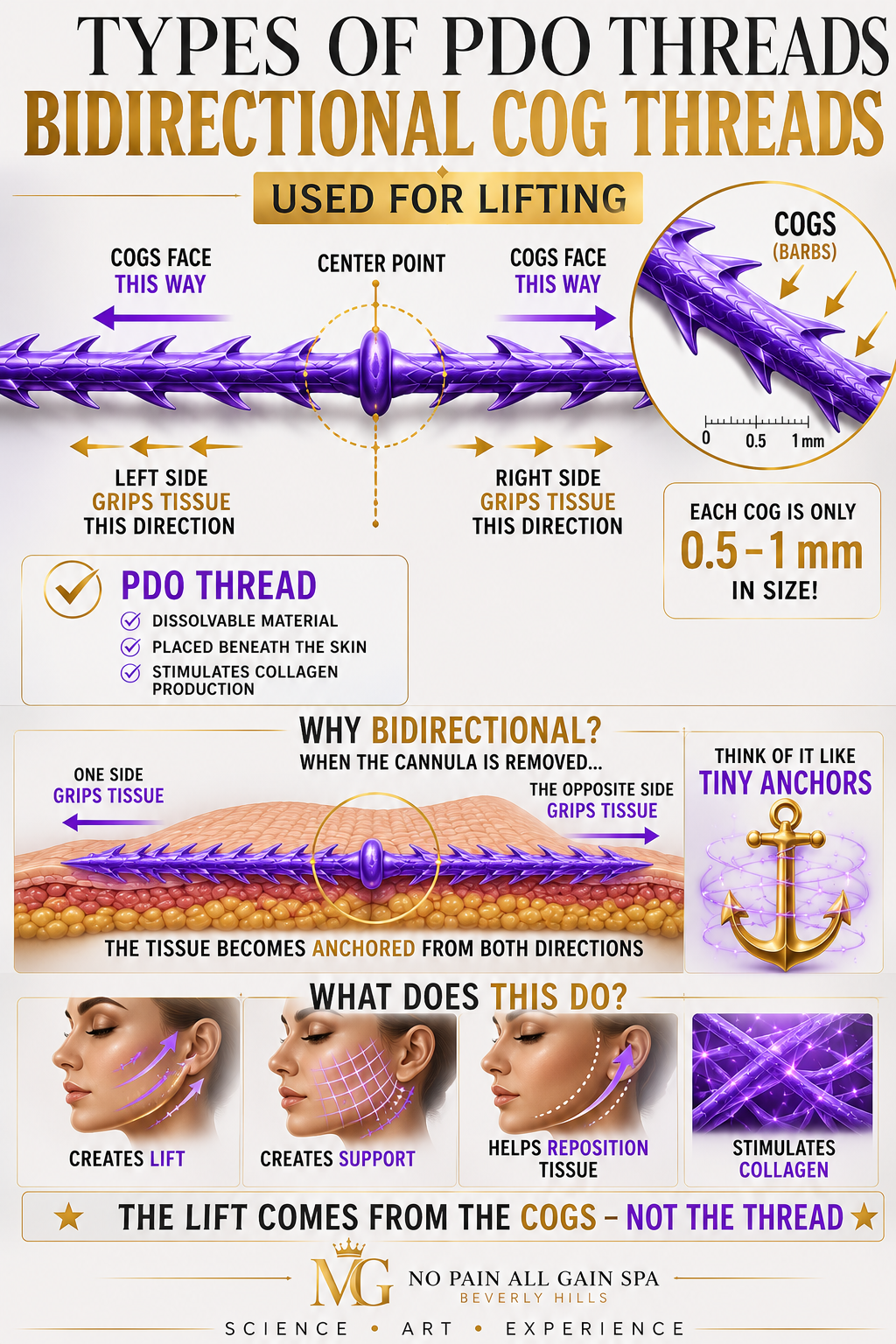
Tap the picture to view it larger.
Think of them as tiny anchors.
In a bidirectional design, cogs face in opposing directions along parts of the thread. They engage tissue to help support repositioning. The plan depends on the specific device, tissue quality, and treatment area.
GOOD TO KNOW More threads do not automatically mean a better result. Appropriate patient selection, device choice, and placement all matter.
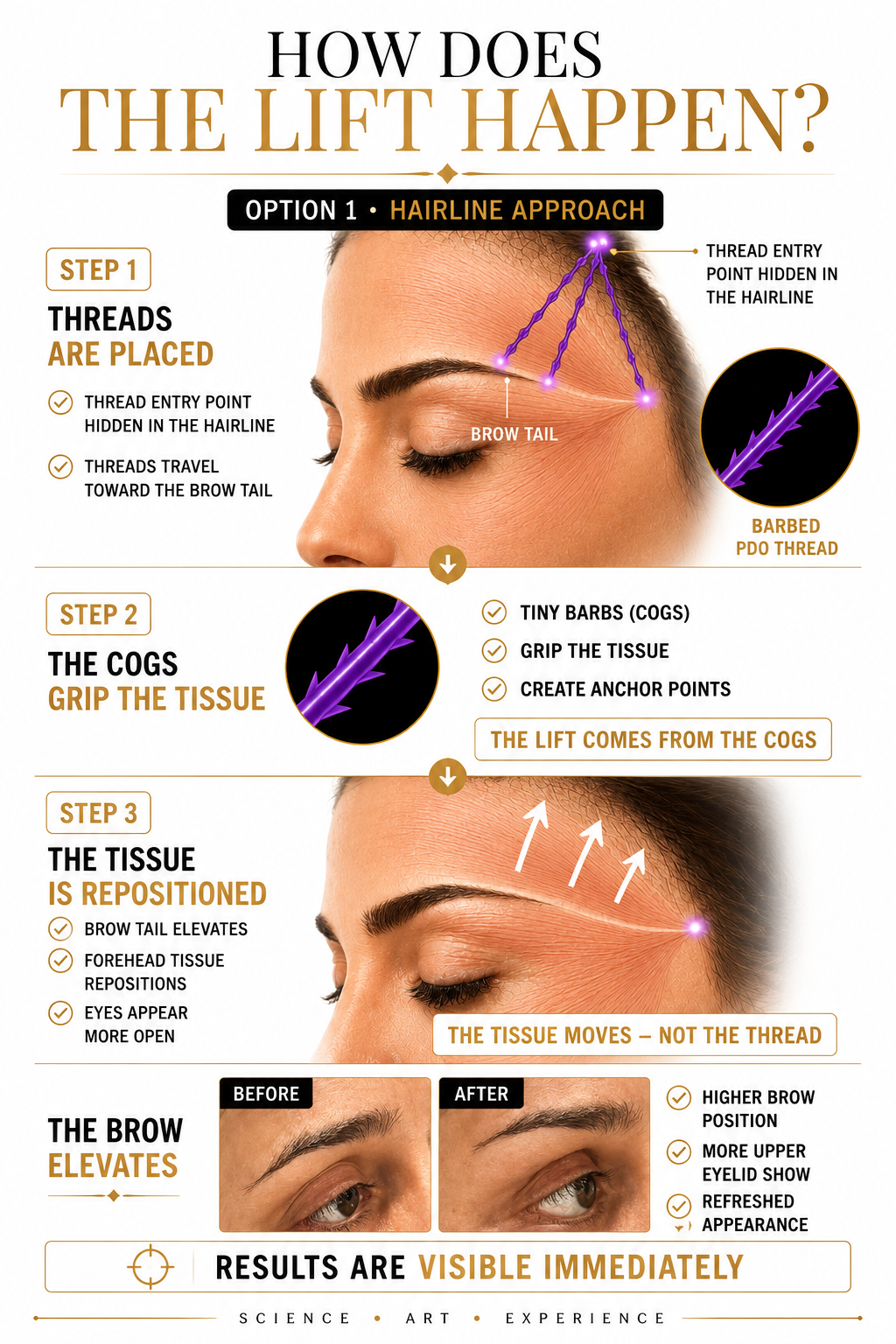
UNDERSTANDING THE LIFT
WHY DOES DIRECTION MATTER?
A “vector” is simply the planned direction of support. We assess your anatomy and the change you want before deciding where a lifting thread belongs.
The direction follows your anatomy.
There is no single placement pattern for every face. The area, tissue quality, and specific thread device guide the plan.
The cogs engage the tissue.
Small barbs along a lifting thread help grip tissue and support repositioning. The diagram shows one approach—not a placement map for everyone.
The goal is balanced support.
We discuss a realistic change that respects your facial proportions. More tension does not automatically mean a better result.
This is a conceptual illustration. Thread design, placement, and fixation vary by device and technique. Threads cannot remove excess skin or reproduce the results of a surgical brow lift.
COMMON TREATMENT AREAS
Start with the area that concerns you. We’ll assess the cause, discuss the options, and explain whether PDO threads make sense for you.
UPPER FACE
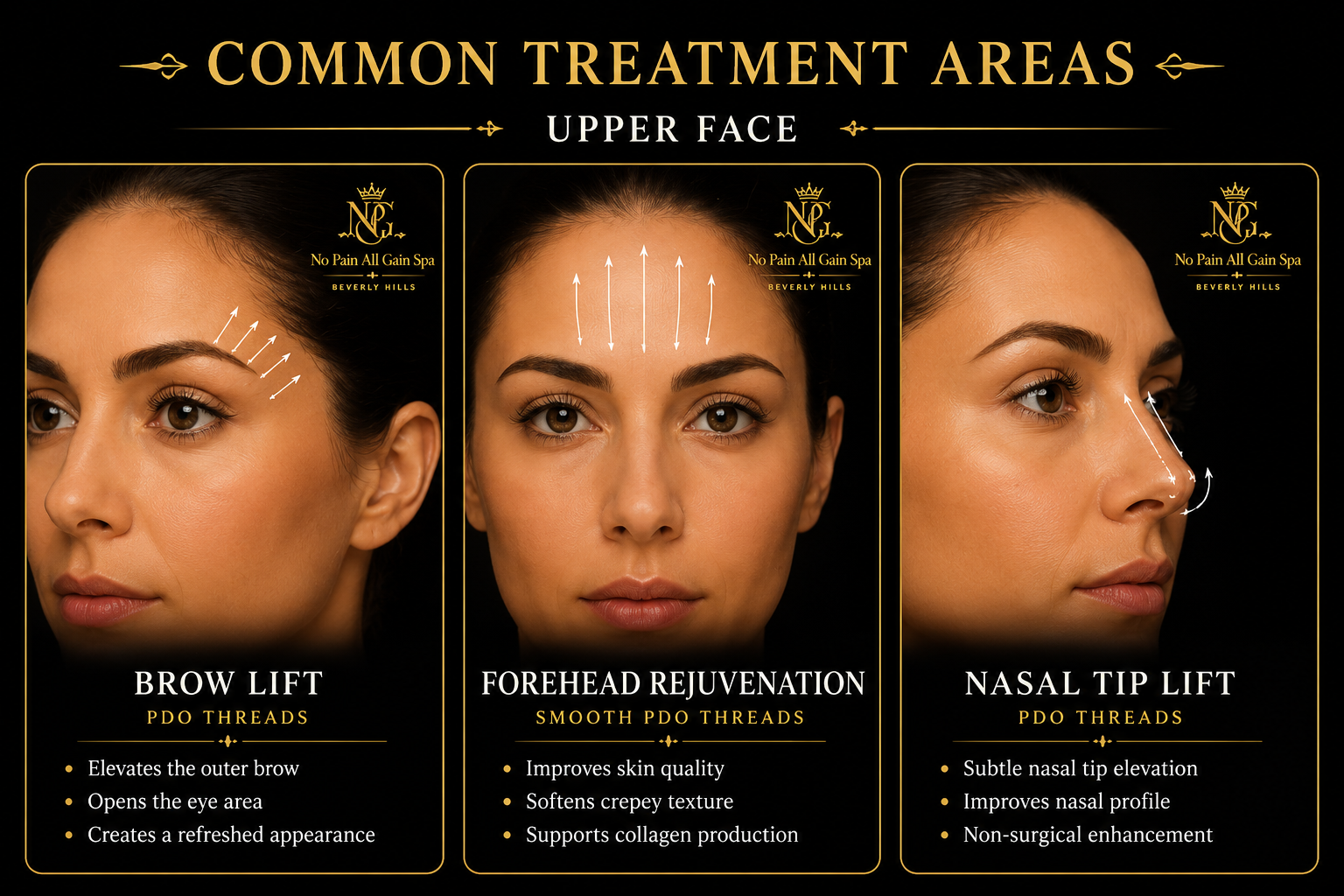
Tap the picture to view it larger.
Brows
We assess brow position, skin laxity, and your goals before discussing whether lifting threads are appropriate.
Forehead skin
Smooth threads are different from lifting threads. Forehead lines may also be related to muscle movement or skin quality.
Nasal tip
Nose-thread treatment needs a separate assessment of nasal anatomy, skin, previous procedures, and realistic limits.
An illustration is not a placement plan. The intended use of the specific thread device matters.
MIDFACE
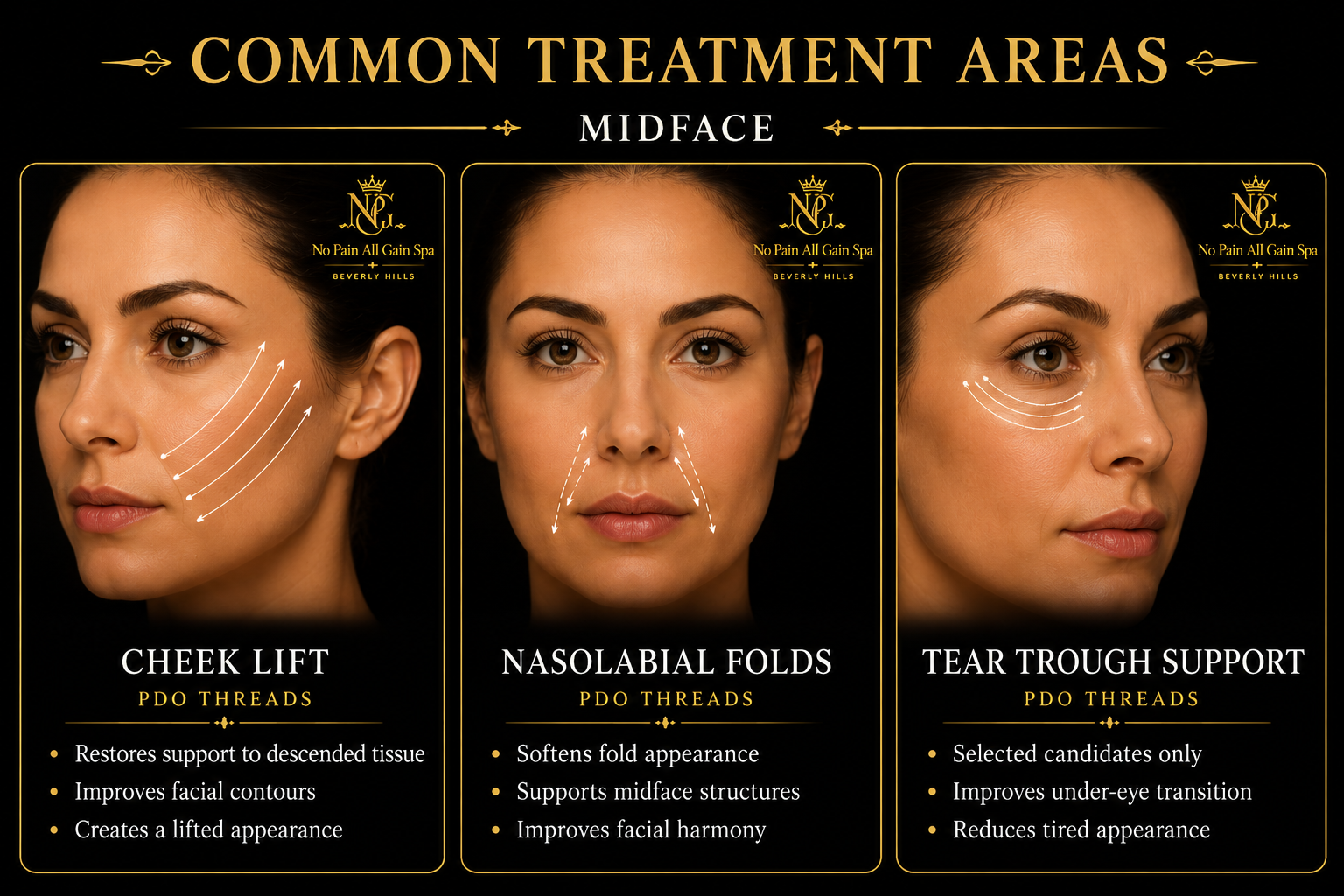
Tap the picture to view it larger.
Cheeks
We assess whether the concern is tissue position, volume loss, or both. Threads reposition tissue; they do not replace lost volume in the same way as filler.
Smile lines
Nasolabial folds need assessment in the context of your cheeks and skin. Threads are not the answer to every fold.
Under-eye concerns
Hollows, puffiness, pigmentation, and skin changes need different approaches. The graphic does not mean threads should be placed directly beneath every under-eye concern.
Where you notice a shadow or fold is not always where treatment belongs.
LOWER FACE
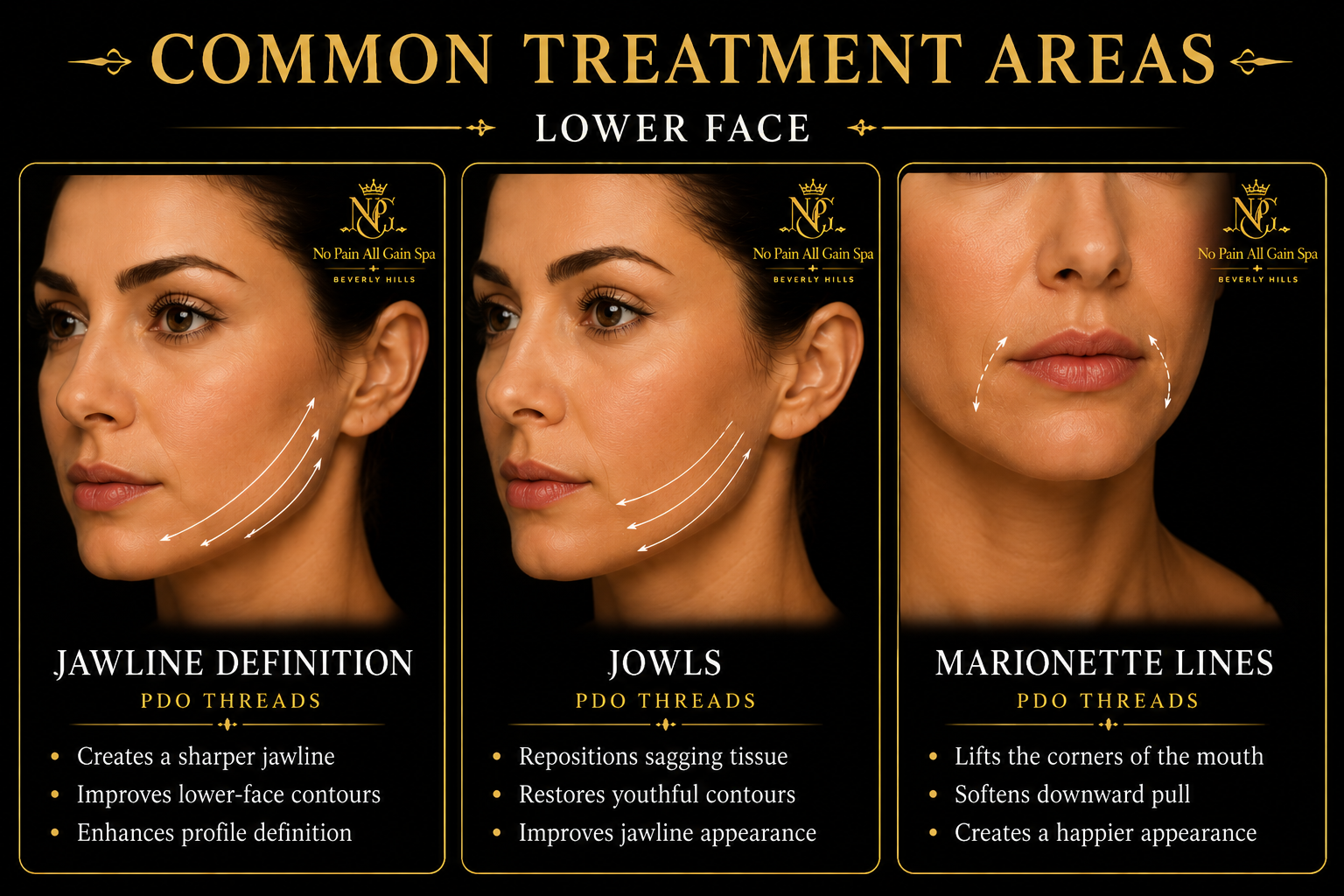
Tap the picture to view it larger.
Jawline
We assess contour, tissue position, and skin quality. Threads cannot remove fat or excess skin.
Jowls
Selected patients may be considered for modest tissue repositioning. Significant laxity may be better addressed through a surgical consultation.
Marionette lines
We look at surrounding support, volume changes, and skin laxity before discussing whether threads fit your concern.
A sharper-looking jawline is not achieved by using more threads alone. Suitability and a realistic plan come first.
NECK & LIP AREA
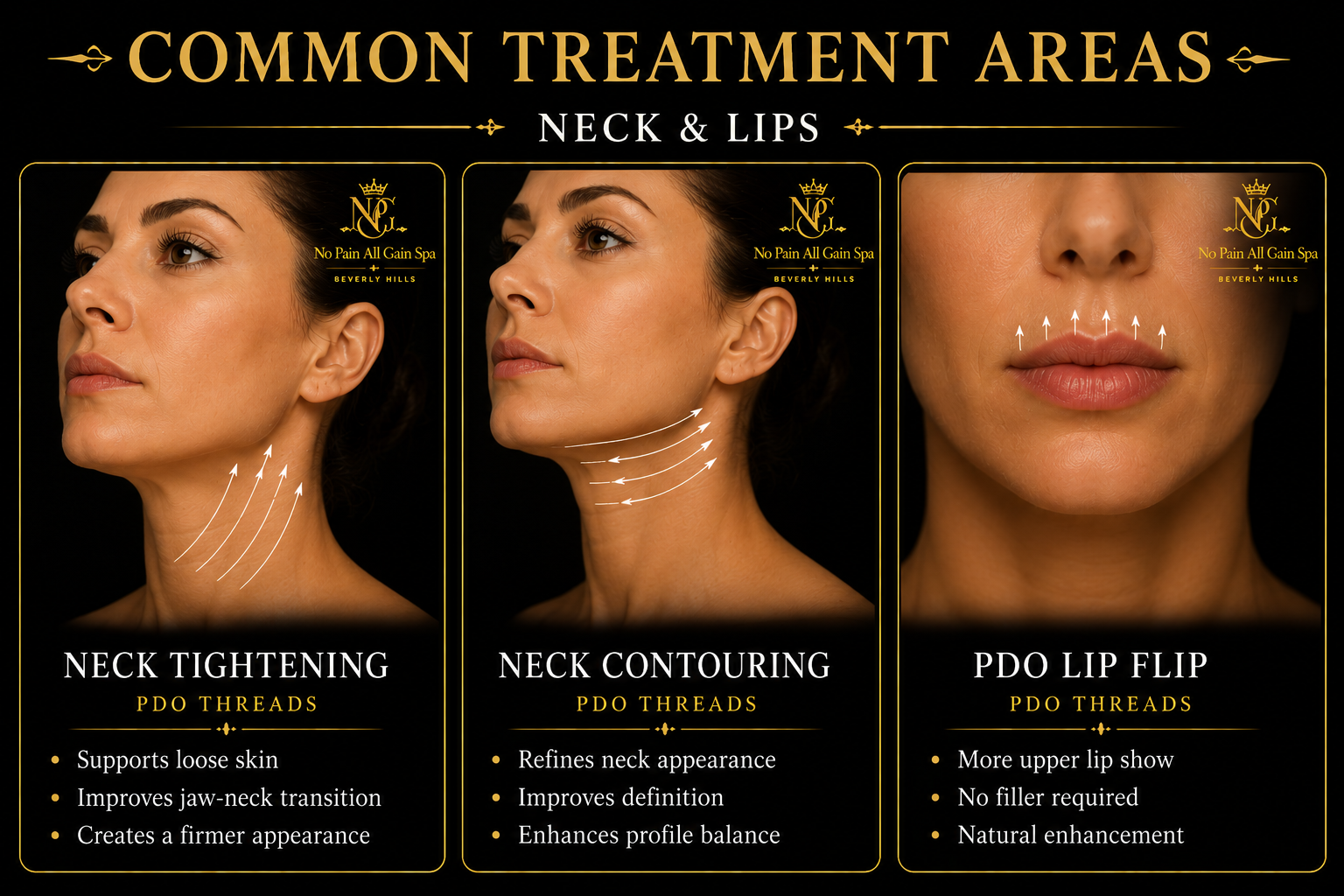
Tap the picture to view it larger.
Neck laxity
Loose skin, neck bands, and fullness have different causes. We assess which concern you have before choosing a treatment.
Neck contour
Thread treatment has limits. It does not remove excess skin or provide the same change as a surgical neck lift.
Lip-area concerns
Threads, filler, and a neuromodulator lip flip are different treatments. We’ll discuss your goal and whether any of these is appropriate.
A “lip flip” usually refers to a neuromodulator treatment. PDO threads should not be presented as doing the same thing.
SKIN QUALITY & COLLAGEN SUPPORT
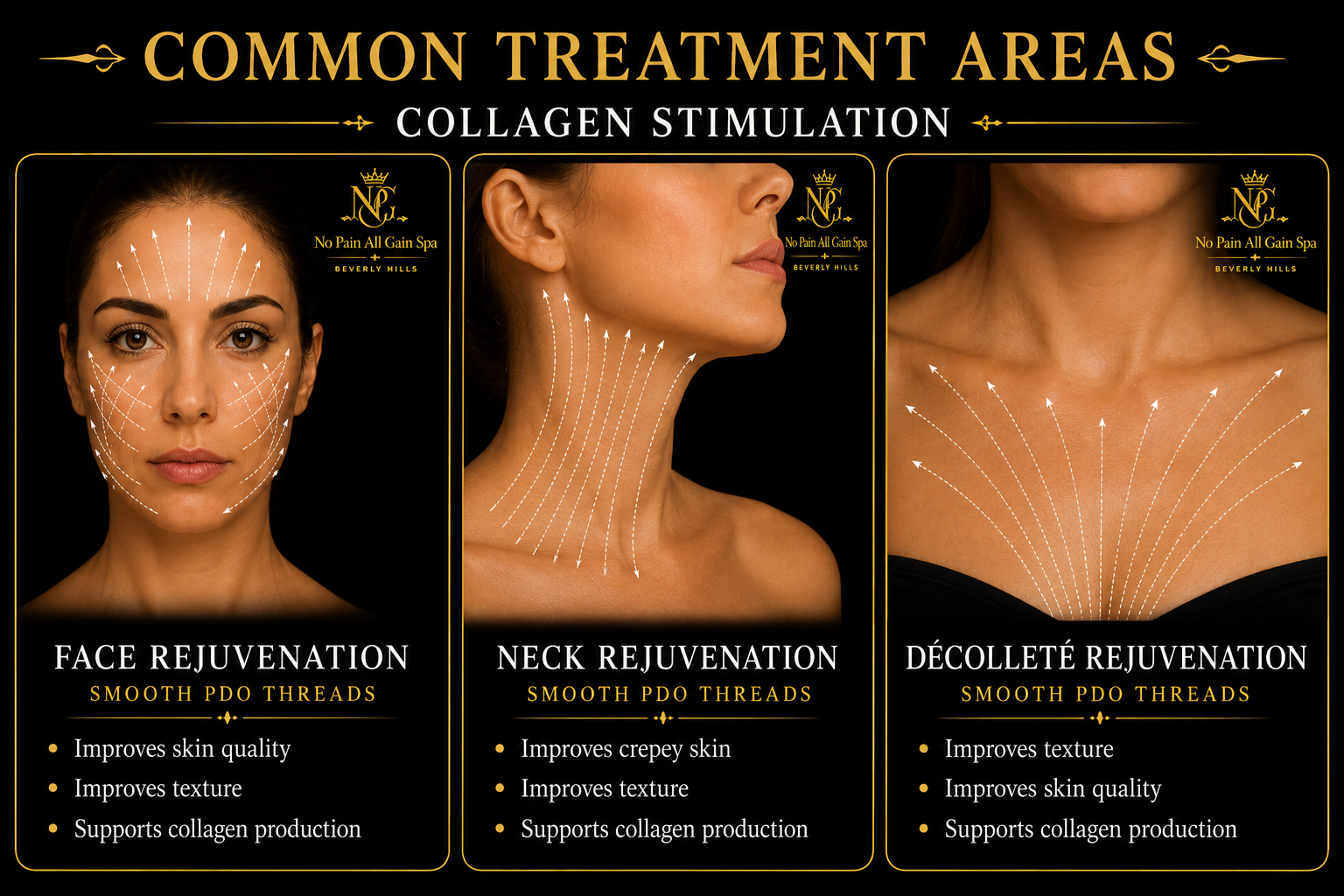
Tap the picture to view it larger.
Face
Smooth threads may be discussed as a skin-quality approach. They do not provide the same mechanical lift as cog threads.
Neck
We assess skin thickness, texture, and laxity. A collagen response does not guarantee visible tightening.
Décolleté
Sun damage, fine lines, and crepey texture need their own assessment. Thread treatment in this area is not automatically suitable.
The body’s response and the visible result vary. Improving skin quality and lifting tissue are different goals.
COMBINED LIFTING PLANS
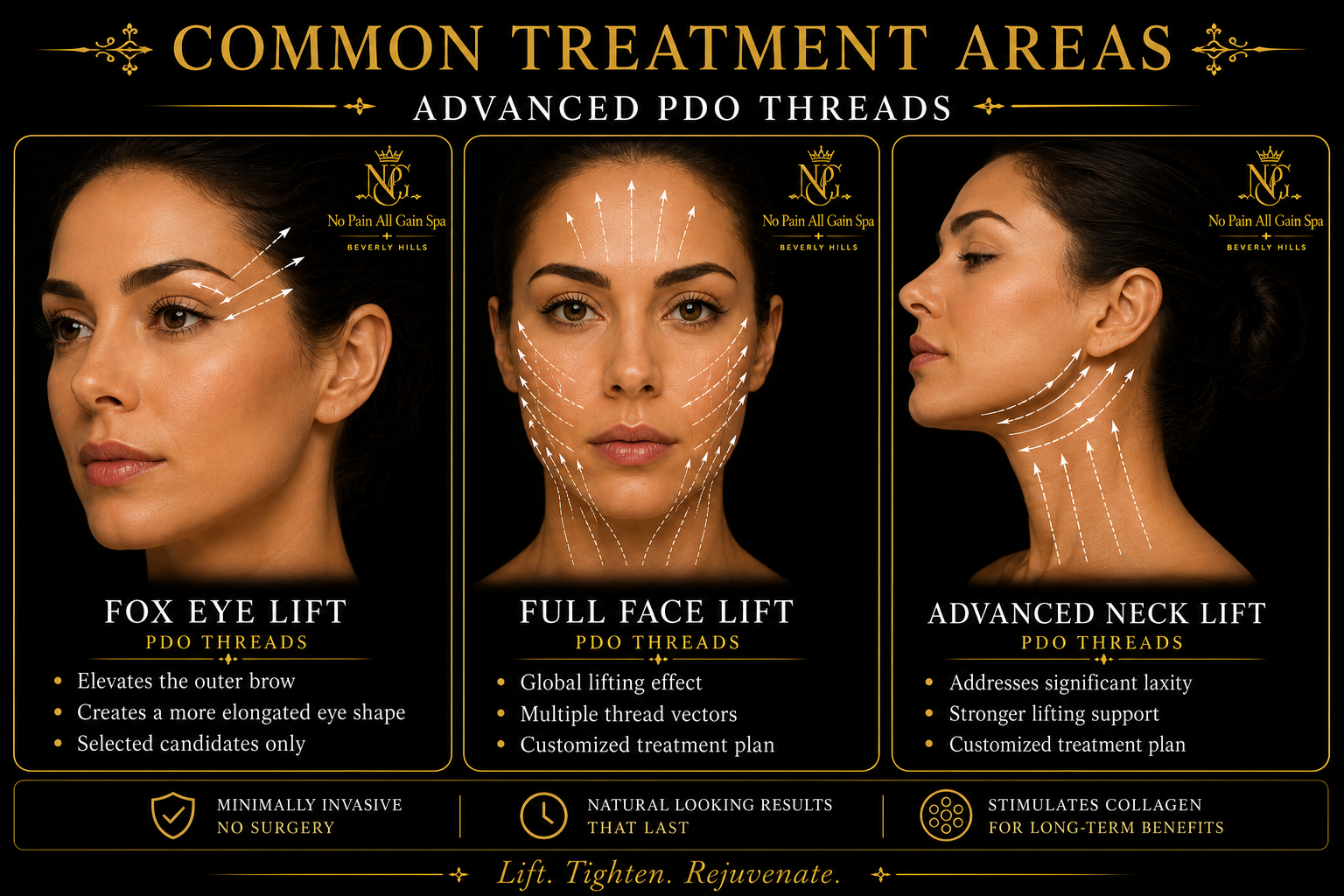
Tap the picture to view it larger.
Outer-brow goals
We discuss the change you want and the limits of thread treatment. Eye and brow shape should not be planned from a trend alone.
Several facial areas
A combined plan requires assessment of each area. More areas or more threads do not automatically improve the result.
More advanced laxity
If your goal requires removing excess skin or repositioning deeper structures, a surgical opinion may be more appropriate.
A thread lift is not a facelift. We’ll explain alternatives when threads are unlikely to meet your goals.
These illustrations show treatment concepts, not guaranteed results or instructions for placement. Suitability, risks, and intended uses depend on the specific device and your assessment. Some uses may be off-label. We’ll discuss the proposed use, limitations, and alternatives before treatment.
NASAL TIP & BRIDGE THREADS
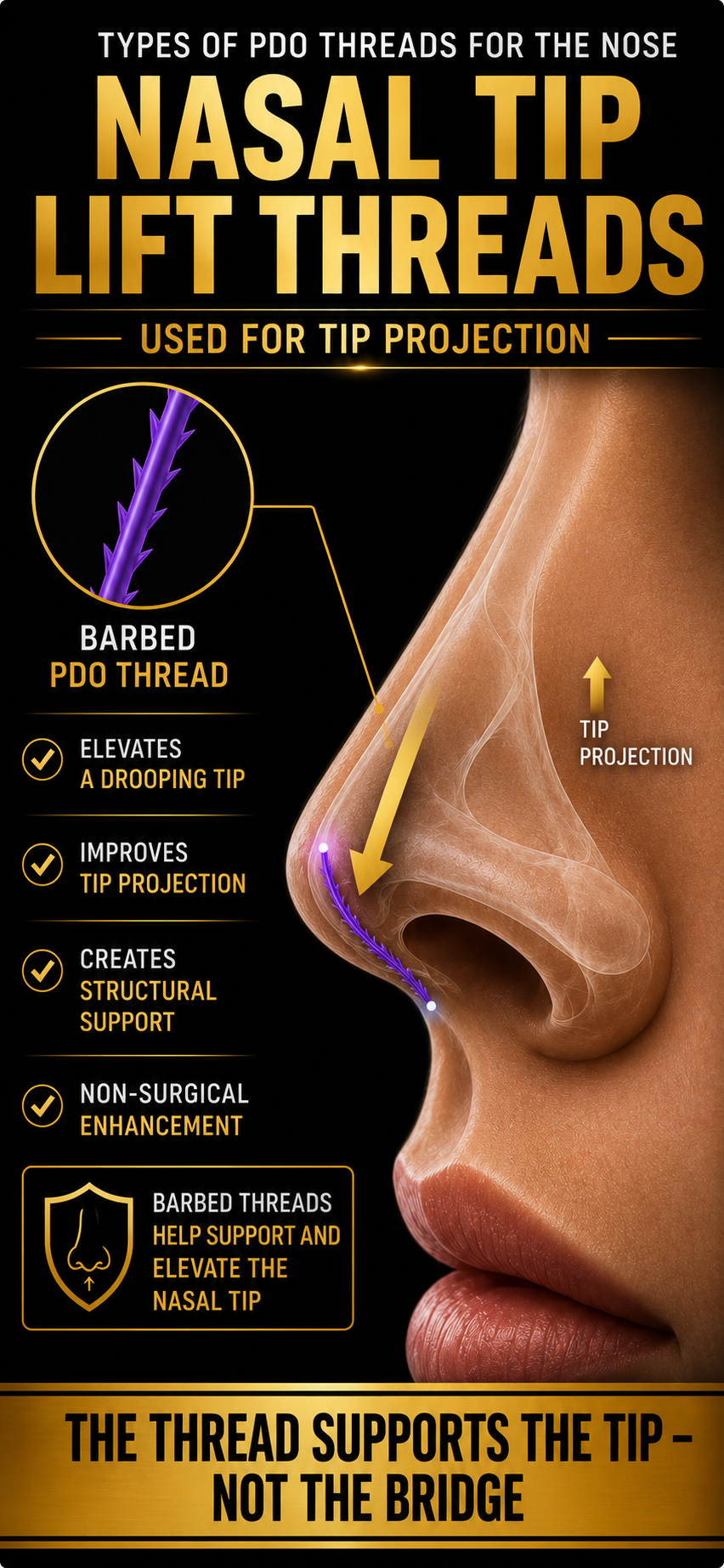
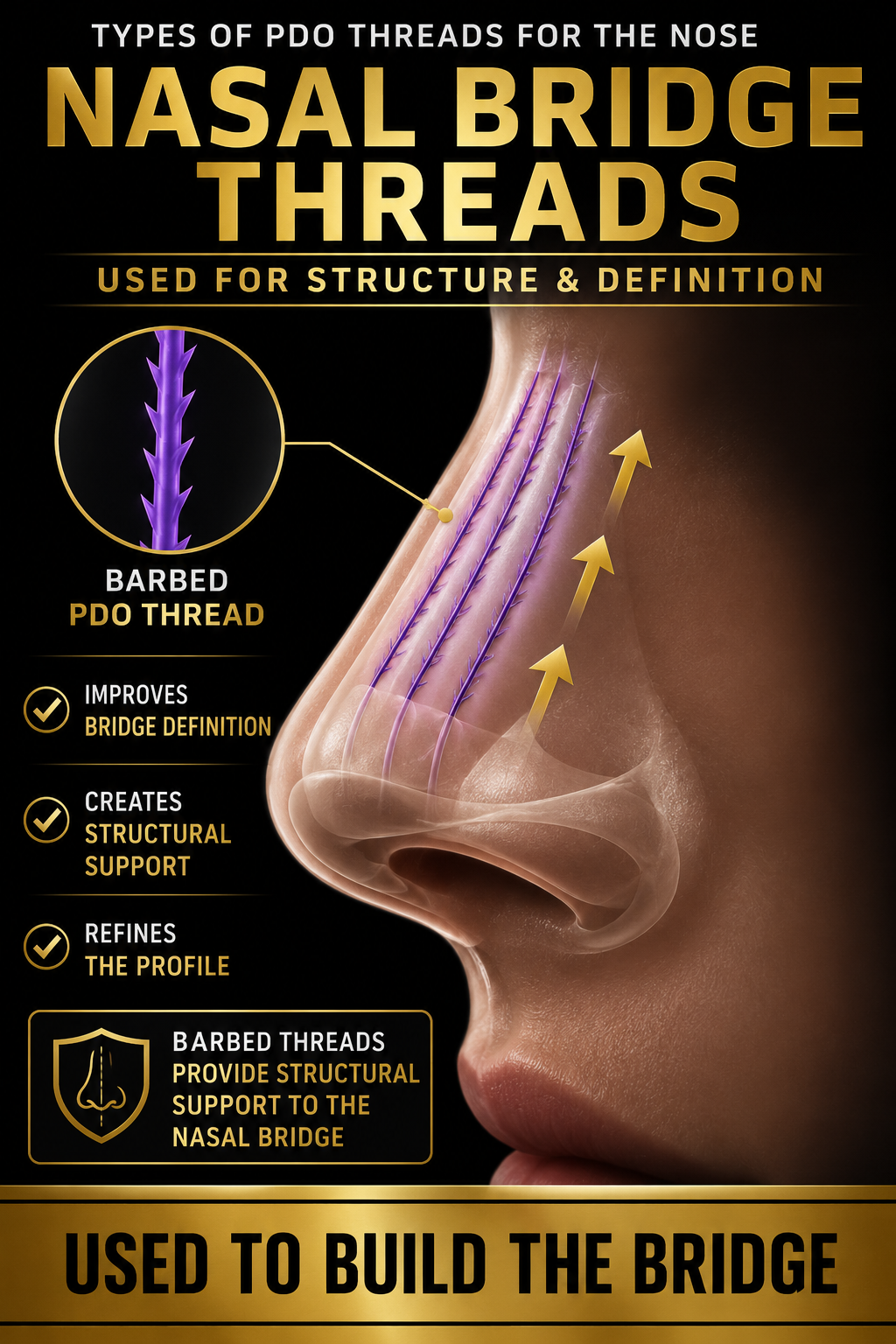
Tap either illustration to enlarge.
The tip and bridge have different support needs. Suitability depends on your anatomy and the specific device. Threads cannot reduce nose size or reproduce surgical rhinoplasty. We discuss limitations, risks, and alternatives at your consultation.
BEFORE & AFTER
Swipe through the examples or use the arrows.
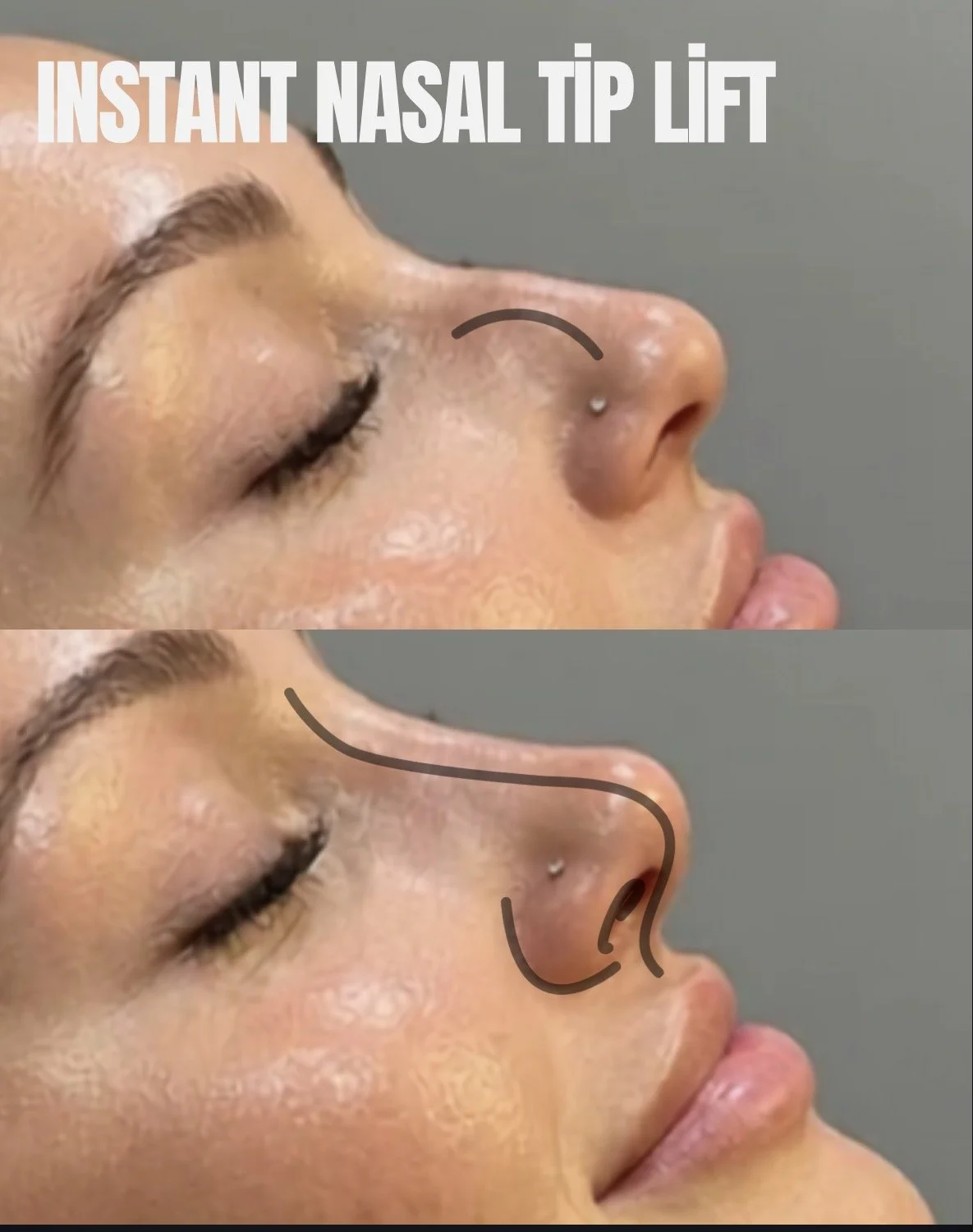
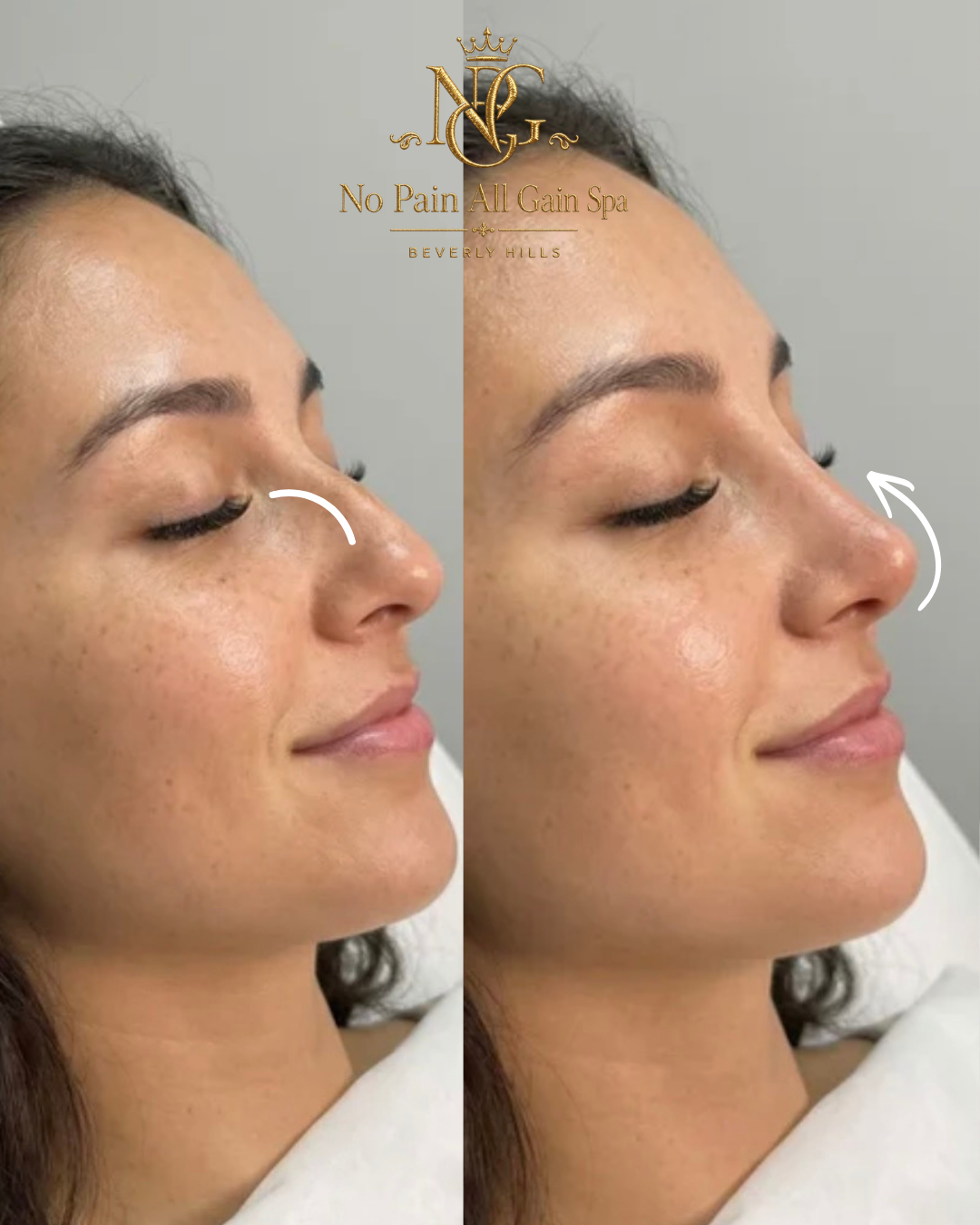
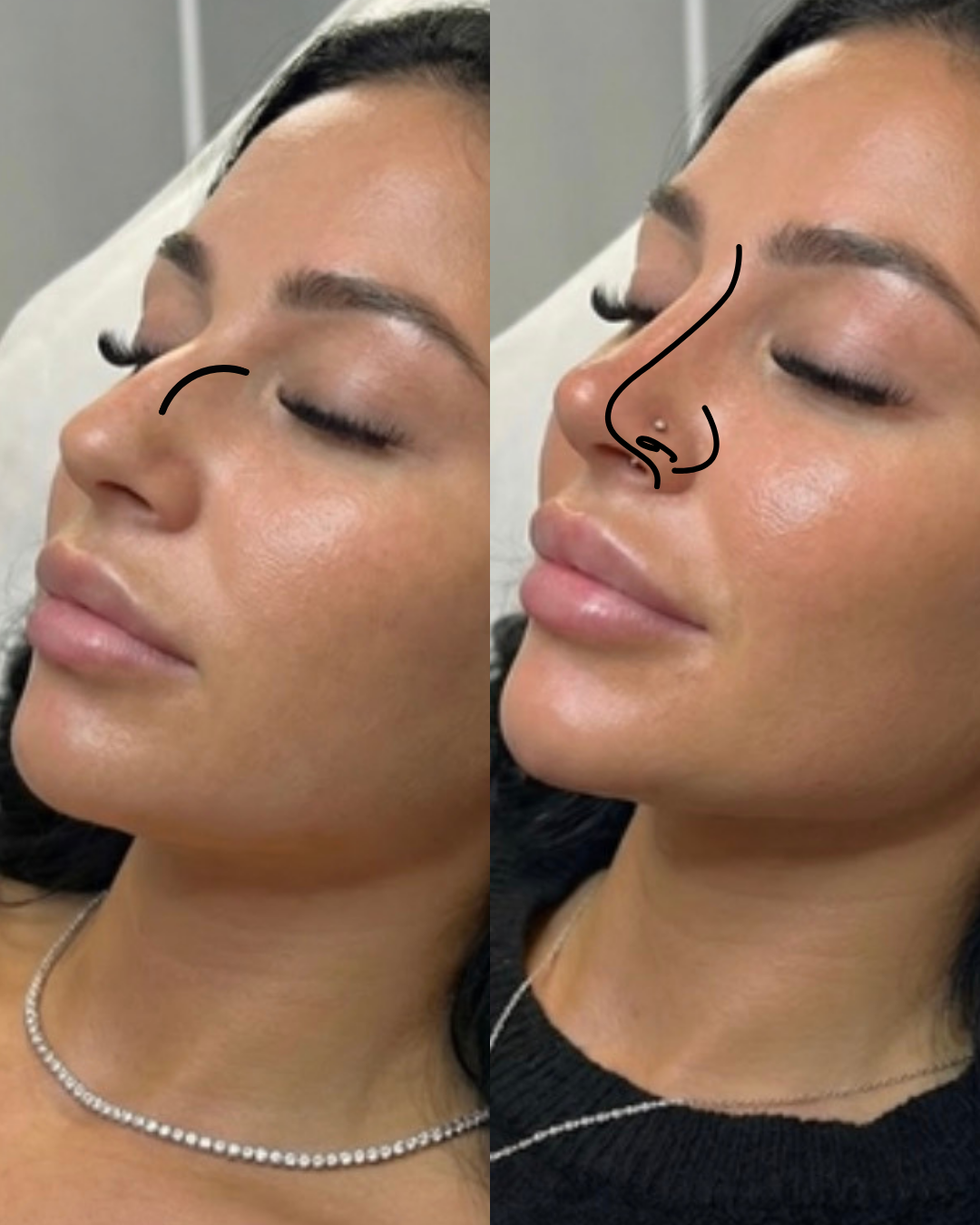
Individual results vary. Photographs are examples, not a guarantee of your outcome.
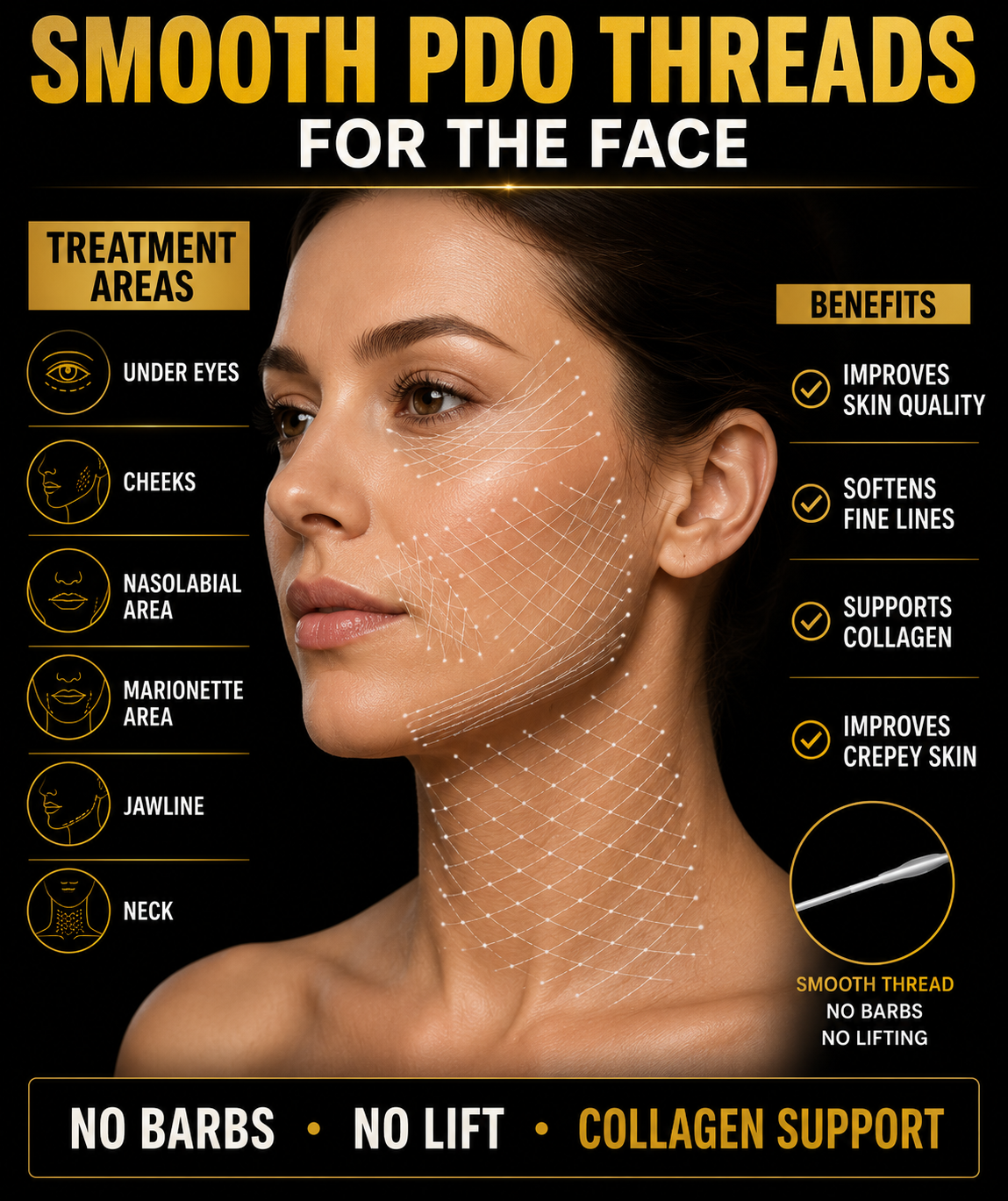
Tap the illustration to enlarge.
SKIN QUALITY • FACE
SMOOTH PDO THREADS FOR THE FACE
Smooth threads have no lifting barbs. They are used with the aim of supporting collagen formation and improving skin quality, rather than repositioning tissue.
We assess the concern, skin thickness, and treatment area before deciding whether smooth threads make sense for you.
Smooth does not mean lifting. These threads do not provide the same mechanical support as barbed lifting threads. Any visible change develops gradually and varies.
Illustrative areas—not a placement guide.
SKIN QUALITY • BODY
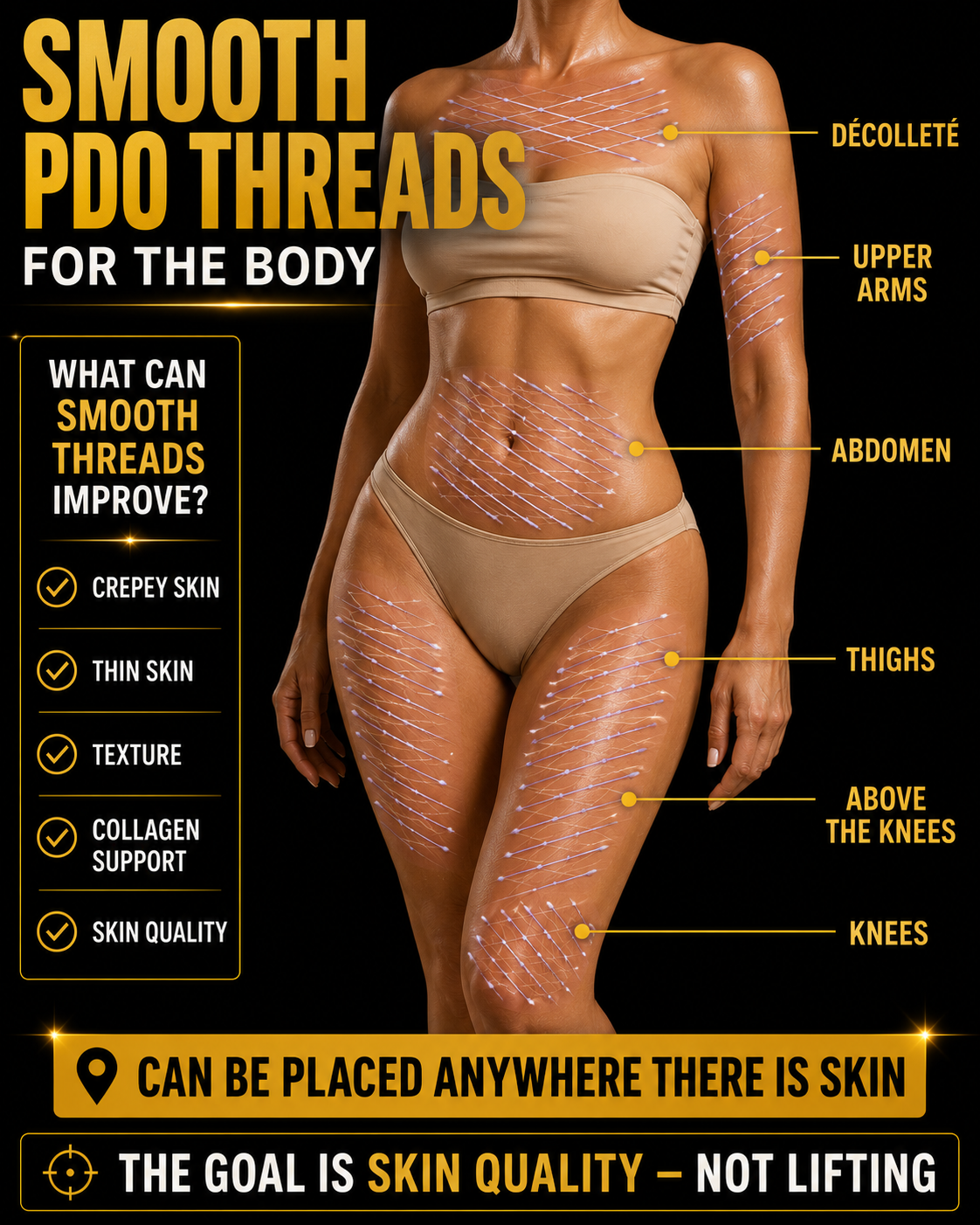
SMOOTH PDO THREADS FOR THE BODY
Skin quality concerns can also occur on the chest, upper arms, abdomen, thighs, and around the knees. The illustration shows areas that may come up during a consultation.
An area appearing in the picture does not mean threads are appropriate for it. Your assessment and the specific device guide what we can offer.
They do not remove fat or excess skin. Significant laxity may call for another treatment or a surgical opinion. We explain realistic options before you decide.
Illustrations explain general concepts. Much of the research on PDO-related collagen formation comes from animal studies; evidence for visible improvement varies by treatment and area. Results are not guaranteed.
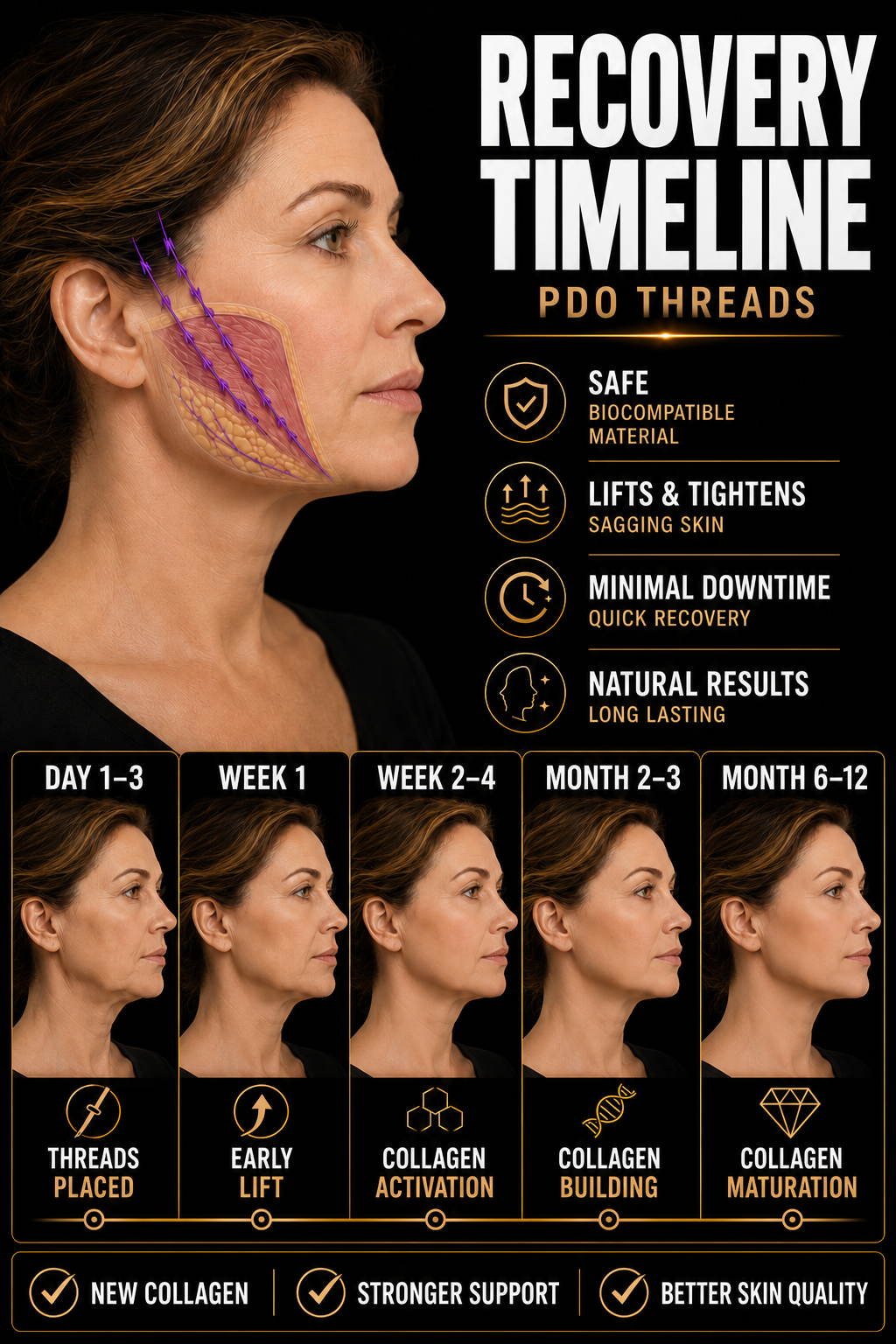
Tap the picture to view the timeline larger.
Your recovery is individual. This poster illustrates general stages, not a guaranteed schedule or result. Swelling, bruising, tenderness, and tightness can occur. Follow your personalized aftercare instructions and contact us about unexpected or worsening symptoms.
BEFORE & AFTER
Explore our PDO thread results. Swipe or use the arrows.
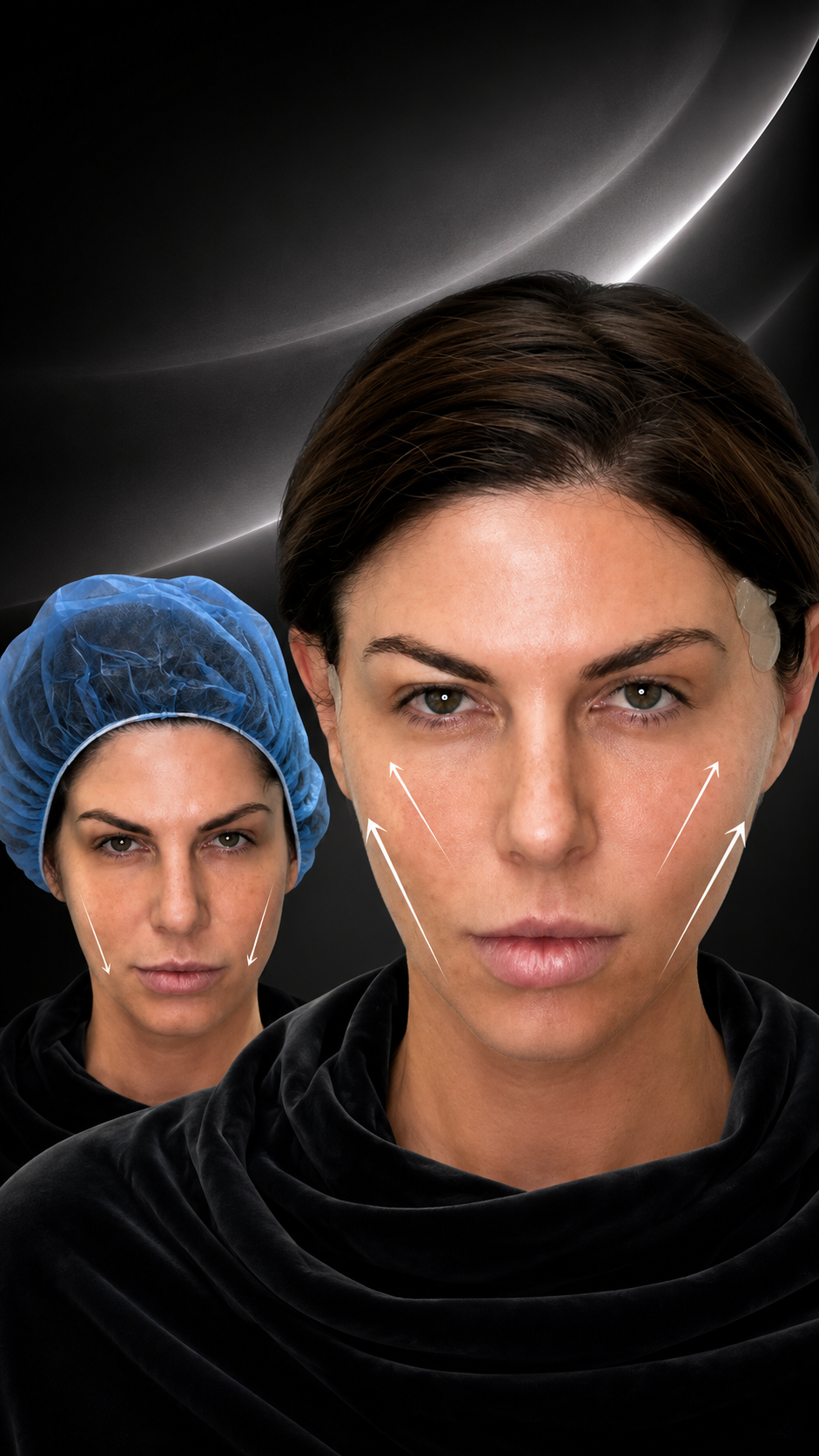
Individual results vary. Photographs show individual outcomes and do not guarantee similar results.
PDO THREADS: MYTH VS. TRUTH
What you may have heard—and what you should understand. Tap a myth to read the truth.
MYTH: THREADS ARE THE SAME AS A FACELIFT.
Threads may offer a modest, temporary change. They do not remove excess skin or achieve the same result as surgery.
MYTH: MORE THREADS MEAN A BETTER LIFT.
The plan depends on your anatomy, tissue quality, and the device. Thread count alone does not determine the result.
MYTH: THREADS WILL ALWAYS MAKE ME LOOK PULLED.
A pulled appearance is not the goal. We plan for balanced support, but asymmetry, dimpling, and an unsatisfactory result remain possible.
MYTH: THREADS WORK FOR EVERYONE.
Patient selection matters. Your skin, facial structure, medical history, and expectations help determine whether threads make sense.
MYTH: THE RESULTS LAST FOREVER.
PDO threads absorb over time, and results are temporary. Absorption time and the duration of visible improvement are different things.
MYTH: THREADS REMOVE LOOSE SKIN AND FAT.
Threads do not remove either. Significant excess skin or unwanted fat may require a different approach.
MYTH: ALL PDO THREADS DO THE SAME THING.
Barbed threads engage tissue for support and repositioning. Smooth threads have no lifting barbs and do not provide the same mechanical lift.
MYTH: THREADS ARE ONLY FOR A CERTAIN AGE.
Age alone does not decide suitability. Your anatomy and concerns matter more than an age bracket.
MYTH: NONSURGICAL MEANS NO RISKS OR RECOVERY.
Bruising, swelling, tenderness, and activity restrictions can occur. Risks also include infection, visible or exposed threads, and persistent discomfort.
The right treatment starts with an honest assessment. Sometimes threads are an option. Sometimes another approach is better.
By Appointment Only
15-MINUTE VIRTUAL CONSULTATION
Complimentary
Speak with Nurse Jordan from wherever you are.
IN-PERSON CONSULTATION
$250
Applied toward your treatment.


